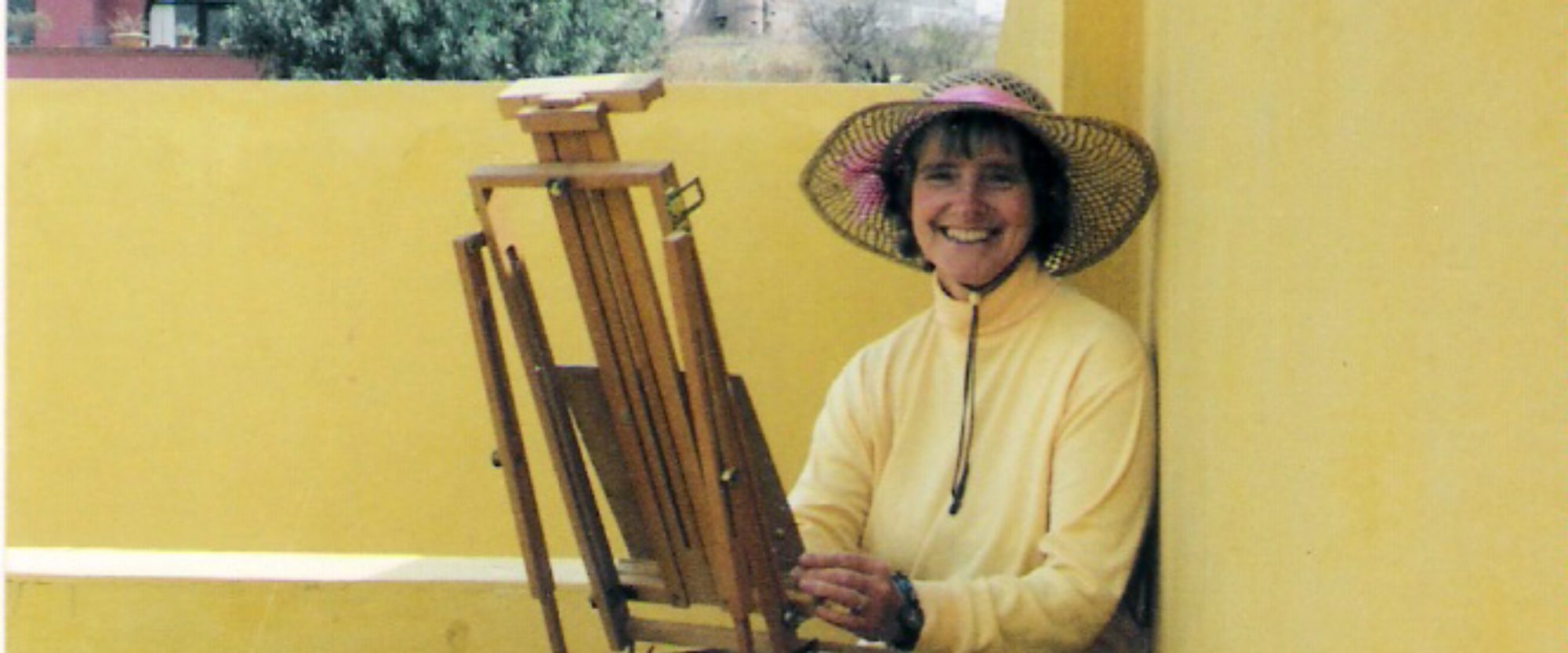

Pioneering Women and Paper Patchwork was first shown at the Huronia Museum in Midland in May and June, 2013, and again in the Bridgenorth Public Library near Lakefield, in July 2025. This series of collages provides a unique window on Canadian life and celebrates the courage and achievements of thirteen women pioneers in nineteenth and early twentieth century Canada. Images on paper, some found in archives, photographs, seed catalogues, old maps, recipes, diaries and letters are used instead of fabric to create traditional quilt patterns to tell their stories.
Marie-Anne Lagimodière 1782 – 1878


Marie-Anne Lagimodière born in Maskinongé, Quebec was the first woman to accompany her voyageur husband by birchbark canoe to the west, le pays d’en haut, and later settled on the Red River. The quilt pattern, Crossed Canoes in birchbark is combined with the Star of Chambly, a quilt block, brought to America from France.
Read more
Newly married to a dashing French-Canadian voyageur, Jean-Baptiste Lagimodière from Chambly, Quebec, Marie-Anne traveled in 1807, with the North West Company canoe brigade from Lachine, Quebec, to the Red River. During buffalo hunts on the prairie, she learned to ride with a child in a saddle bag and another strapped to her body. Taught by her Indigenous friends, she became an expert at snaring small game and making pemmican. Often alone for long periods while her husband was hunting, her courage and resourcefulness enabled her to raise their eight children through troubled times. She was later godmother to many more in her community of St Boniface, Manitoba. Louis Riel, her grandson, was the Métis leader in the 1885 resistance to encroachment on Métis lands. Today there is a park honouring the Lagimodières on the site of the home they built ten years after Marie -Anne’s arrival in the west.
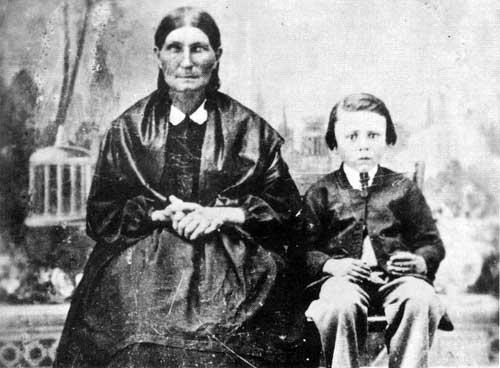
Letitia Hargrave 1813 – 1854

In 1840, Letitia MacTavish from the Scottish highlands, married James Hargrave, the chief factor at the Hudson’s Bay Company’s post at York Factory on Hudson Bay. For twelve years she kept house in the white wooden barracks on the swampy flats of the Hayes River, writing many letters vividly describing her life there. She gave birth to five children, one of whom died when a few days old. Only two years after the family’s move to a more comfortable home in Sault St. Marie in 1852, Letitia died.
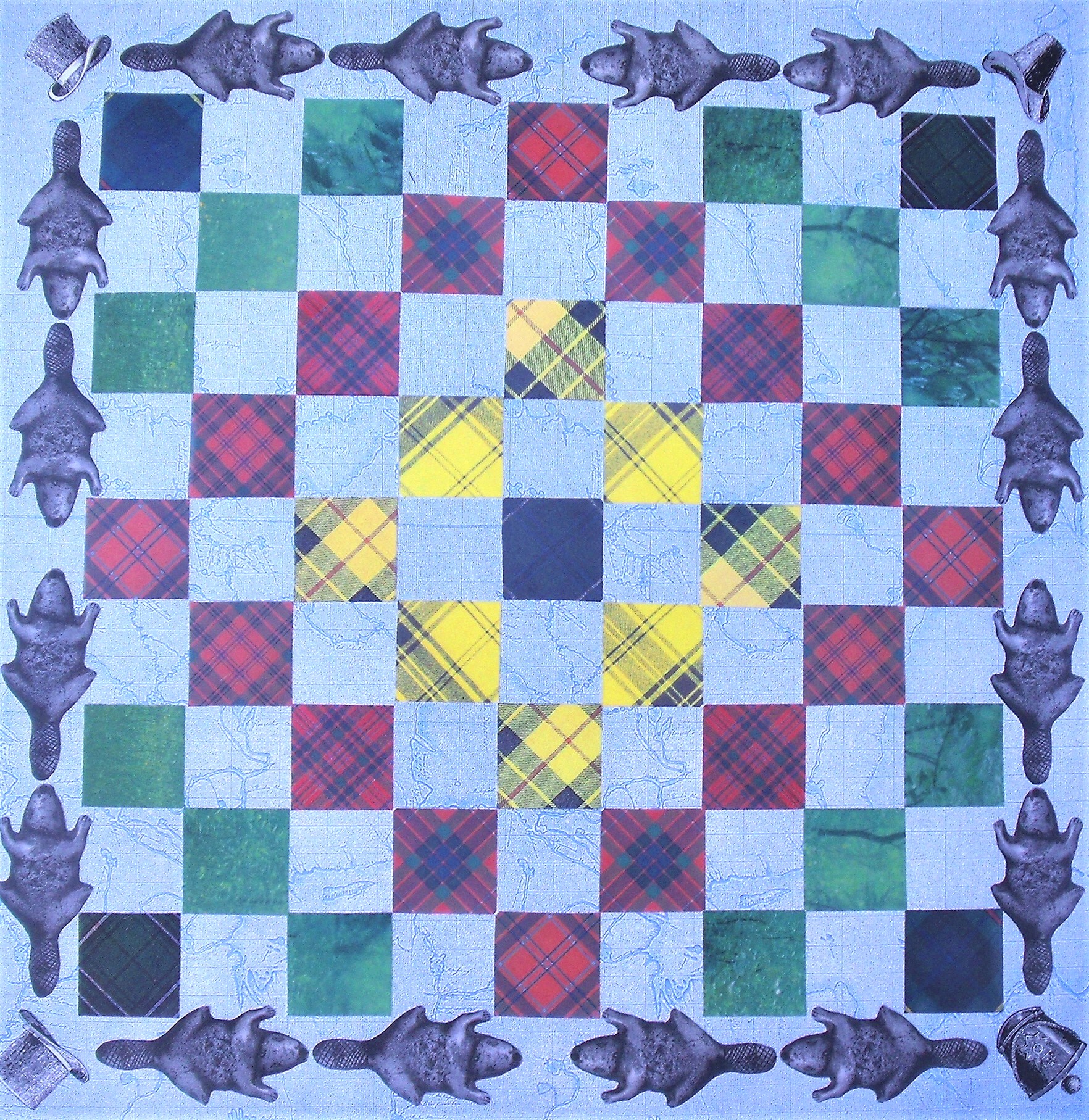
In the quilt block Trip round the World, images of highland plaids in typical Hudson Bay colours reflect the origin of many of the men in the employ of the Company. The background is an early Company map. The beaver tokens in the border were handed out to the Indigenous trappers in exchange for furs. The pelts were sent overseas to become the fashionable hats seen in the four corners.
Read more
The newly weds sailed in June 1840 from Stromness in the Orkneys with Letitia’s prized possessions on board, through stormy seas to their lonely posting on Hudson Bay, to a climate her husband described as “nine months of winter varied by three of rain and mosquitoes.” In the barracks at York Factory, she added the familiar touches of her Turkey carpets, a sofa and a piano. Life, however, was challenging. Food supplies were scarce and scurvy, influenza and colds raged through the settlement. The severe conditions at York Factory may have taken their toll. She died at only 35 after their move south, contracting cholera in 1854.
Frances Anne Hopkins 1838 – 1919

Frances Anne Hopkins, the granddaughter of a well known portraitist Sir William Beechey, accompanied her husband Edward Hopkins, secretary to the Sir George Simpson of the Hudson Bay company on canoe trips, sketchbook in hand, into the Canadian interior. Her sketches and later paintings provide us with iconic images of the voyageurs, the Indigenous people, and the landscape.
The quilt pattern Crossed Canoes is here combined with images of a HBC map, rapids and Lake Superior pebbles.
Read more
Her marriage in 1858 to Edward Hopkins gave her the chance to observe and paint the Canadian wilderness. Her sketchbooks, made of linen with leather corners are now in the Royal Ontario Museum. Her paintings, done from her sketches, show with breathtaking accuracy the lives of the voyageurs.
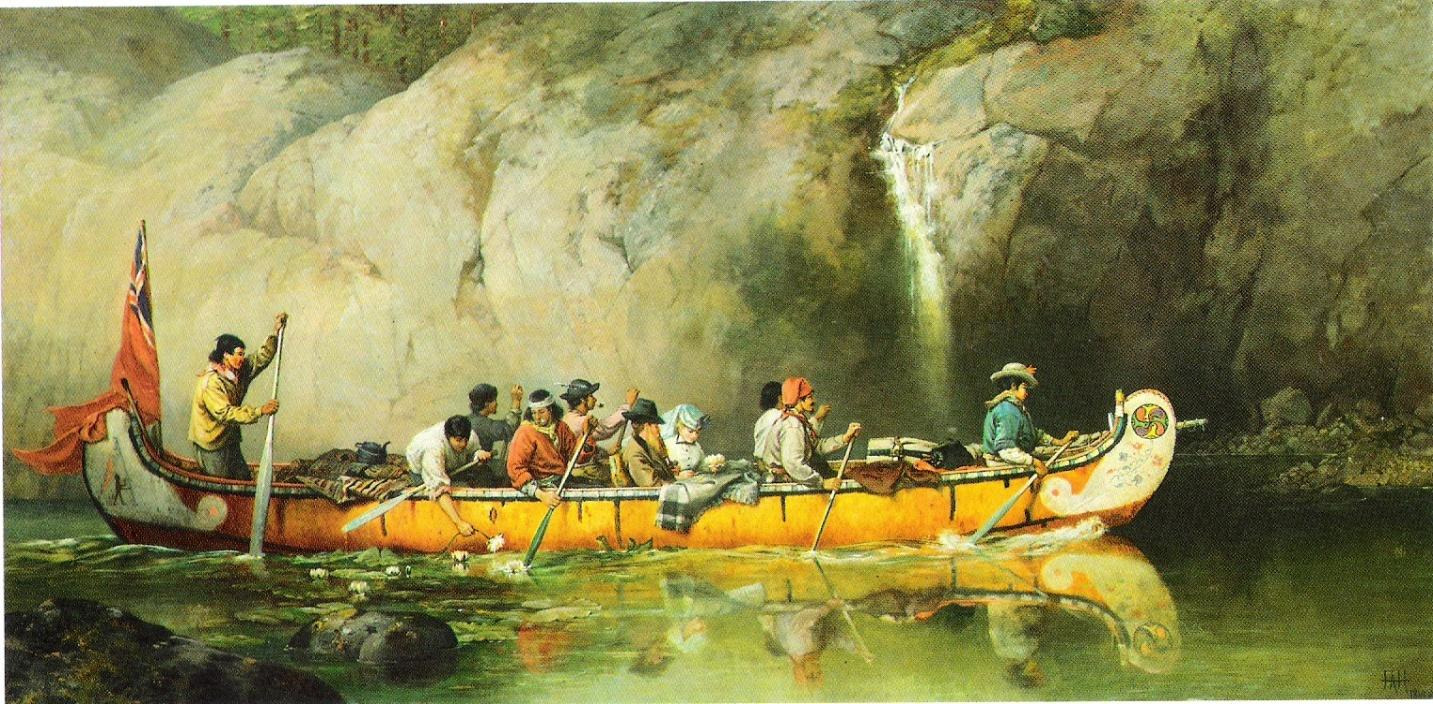
In one, now at the National Archives in Ottawa, she sits beside her bearded husband, in the centre of a huge canôt de maitre, sketching a waterlily held in her lap. In 1870 she returned to England but continued to paint Canadian scenes, some of which were exhibited at the Royal Academy in London, a recognition that was rarely accorded women artists of the day. It took until 1990 for a full-scale exhibition of her work to be mounted in the Thunder Bay Art Gallery in Canada
Frances Stewart 1794 – 1872

Dublin born Frances Stewart and her husband Thomas Stewart settled near Peterborough in the 1820s. Later she shared with Catharine Parr Traill her interest in botany and music, for the Stewarts owned the only piano for miles around. Despite the isolation and privation of the early years she brought up four daughters and six sons. Tragically one of the girls, Bessy died during their first year in Canada. Tom had decided to build a little chapel nearby, with a burying ground, little thinking that their …“blooming laughing cherub would be the first of its occupants.”
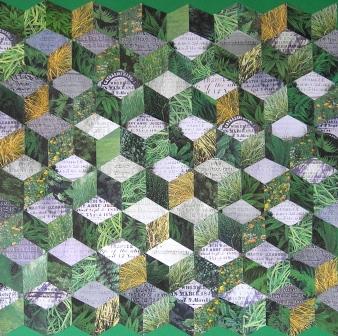
Nineteenth century cemeteries are full of memorials to lost children. The tops in the quilt pattern, Baby Blocks are such grave markers photographed around Ontario, the sides, fields of grass and wildflowers.
Read more
Frances was one of the first Irish immigrants to the Peterborough area. Her letters are full of lively details of her life in the lonely bush. Fifteen years later many more Irish immigrants arrived in the summer of 1825 in the nine ships organized by Peter Robinson. After her death her daughter Eleanor published Our Forest Home, an edition of her letters. Today a high school close to their land is named after her husband Thomas A Stewart.
The more I read about the lives of these women, the more I realized how many had lost children, and in fact, how many had themselves died in childbirth. In the nineteenth century, my own great grandmothers died. My great grandfathers quickly married again to have mothers for their babies. Baby blocks with its Escher-like 3D effects is still a popular pattern for quilt makers.
Catharine Parr Traill 1802-1899
Catharine Parr Traill emigrated from England with her husband William in 1832, the same year as her younger sister Susanna Moodie. Living in log cabins, the couple settled in the Peterborough area to be close to her brother Sam Strickland. She was a skilled amateur botanist, who wrote books about native plants and whose dried specimens, some mounted on birchbark, are today in the National Museum of Nature in Ottawa. As she wrote to a friend in England,
“Our woods and clearings are now full of beautiful flowers. You will be able to form some idea from the dried specimens I send you… I regret that among my dried plants I could not send you some specimens of our superb waterlilies and irises but they are too large and too juicy to dry well.”
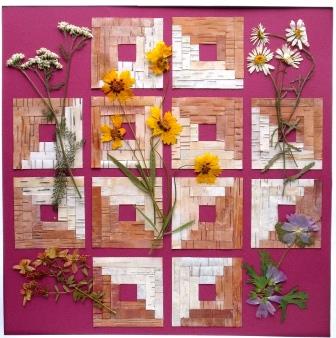
The Log cabin quilt block, here using the dark and light sides of birchbark, surrounding a warm hearth, was popular throughout the nineteenth century. The pressed flowers were gathered around our cottage on the Georgian Bay.
Read more
Life was not easy and Catharine had to find a way to earn money through her writing. The successful publication of The Backwoods of Canada in 1836 about her experiences in the bush, was followed in 1854 by The Canadian Settlers’ Guide with useful advice to immigrants. Canadian Wildflowers was published 1868 with hand-coloured lithographed illustrations by her niece, Susanna’s daughter, Agnes Fitzgibbon and another Plant Studies in Canada in 1885.
Her practical and optimistic nature helped her to raise a family of six. As she wrote: “in cases of emergency, it is folly to fold one’s hands and sit down to bewail in abject terror: it is better to be up and doing.” Catharine spent her last years in Lakefield and her summers at her daughter Kate’s cottage on Stoney Lake. She remained active until her death at 97.
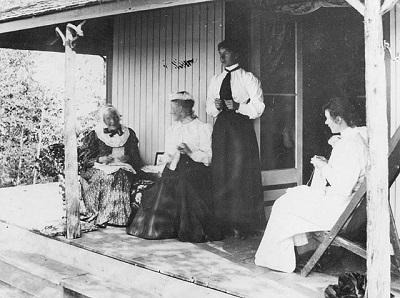
Susanna Moodie 1803 – 1885


Susanna, already a published author, emigrated from England with her husband John Moodie in 1832. After some time on a cleared farm near Port Hope, they moved in winter to a bush farm near Peterborough to be closer to her brother Sam Strickland and her sister Catherine Parr Traill. The journey by horse-drawn sleigh was full of hazards and when the sleigh overturned all her crockery and stone china were smashed. A story told twenty years later in her book, Roughing it in the Bush, a dramatic, humorous, and sometimes sharp account of the trials of life in the “bush” which was an international sensation.
In the quilt block Broken Dishes images of blue and white Spode china patterns of the early 19th century. like Susanna’s are taken from ones found on the internet. The broken dishes are surrounded by snowball blocks with a sawtooth border.
Read more
Susanna Moodie and her growing family did not stay long in the bush but moved to the town of Belleville in 1840. Unlike Roughing it in the Bush her later book, Life in the Clearings was not such a success. Often strapped for money she did paintings, and sold stories, poems and articles to magazines, chiefly the Montreal based, The Literary Garland.
In the early days in her log cabin, she wrote with goose quill pens and sometimes in the winter kept the ink bottle between her knees to keep it from freezing. She lived on for many years after her husband’s death in 1869, often visiting Catherine and her own children’s families. She died in Toronto at the home of her daughter Katie Vickers in 1885.
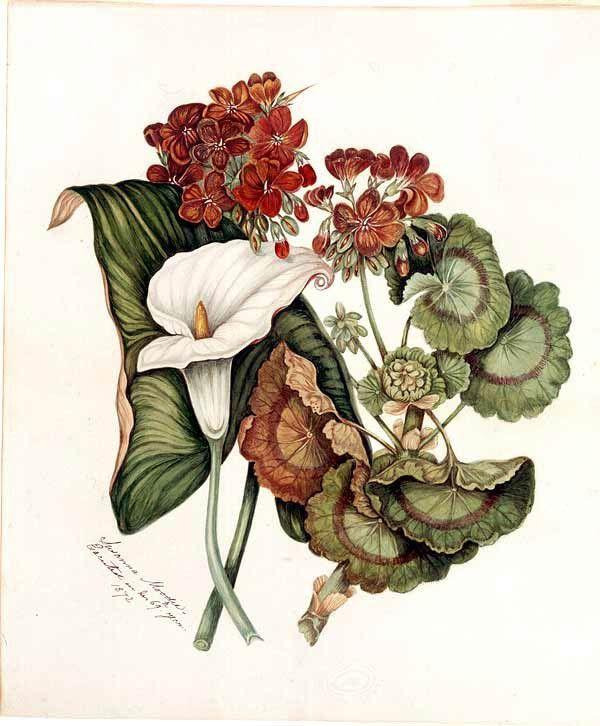
Anne Langton 1804 – 1893


Anne Langton travelled in 1837 from England with her parents and her Aunt Alice to join her brother’s family on Sturgeon Lake near Fenelon Falls. Well educated and a talented artist, she found herself coping with new challenges in the kitchen, often to do with pigs.
Pigs in Clover, a nine patch, combines watercolour images of pigs with recipes from a nineteenth century cookbook, and clover images from contemporary seed catalogues found in the archives of the Royal Botanical Gardens. Burlington.
Read more
Two years after Anne’s arrival she writes in her journal, “A pig was slaughtered to-day and my mother and I discovered that we are not quite perfect in our business yet, for the black puddings, which rested with us for the first time gave evidence of our inexperience. I am going to exercise my skill in shaping ham tonight That I consider my special province. My mother shines in rolled pig’s head, and Aunt Alice in pork pies.”
In addition to all the household chores, she sketched, painted, and set up a school for local children. Her drawing five years after their arrival in their new log cabin home resembles a scene from Jane Austen transported to the Canadian woods.
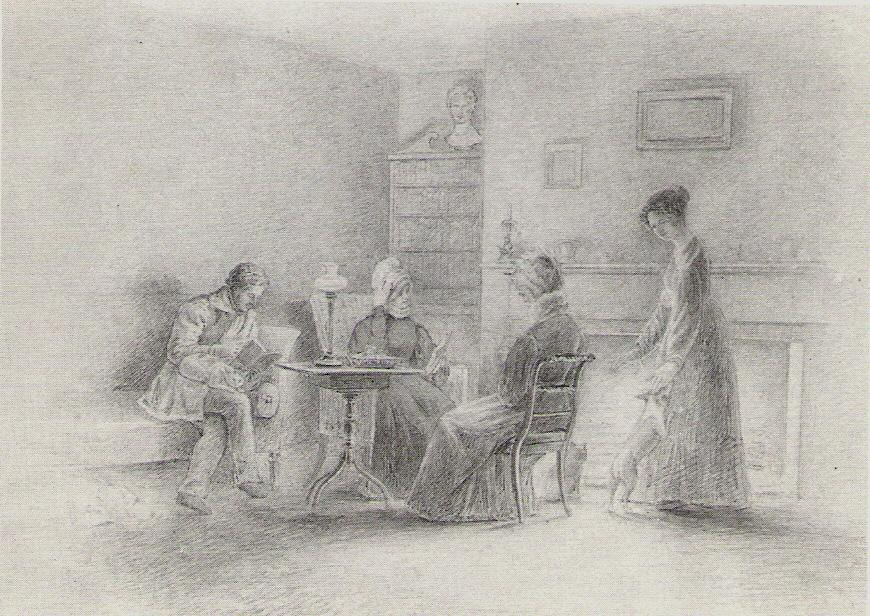
Anne never married. She moved with her brother John’s family to Peterborough then to Toronto, where she died at 88. Her nephew Hugh Hornby Langton edited her entertaining letters in 1950 as A Gentlewomen in Upper Canada and in 2008, Barbara Williams published a greatly expanded and illustrated edition with the University of Toronto Press.
Mary O’Brien 1799 – 1876
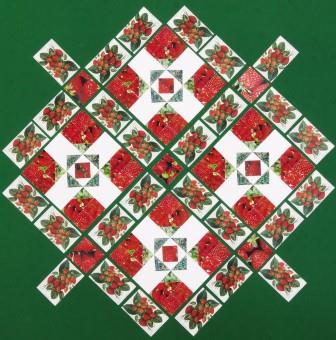

Mary O’Brien and her husband, Edward O’Brien, a retired British army officer, established the settlement at Shanty Bay on Lake Simcoe. Her delightful journals describe her life as a wife, mother, teacher and hostess. In one entry she tells of travelling by canoe to pick wild strawberries with her children. A Strawberry block uses images of strawberries and 19th century seed packages, arranged diagonally.
Read more
Her son, Henry O’Brien, tells of their arrival at Lake Simcoe in February of 1831
“In the early morning, they started across the ice in sleighs… Before nightfall a space was cleared and three small log shanties were built, one for the family of three, one for the [Scottish] Highland axemen, and one for a kitchen. Mary spent part of her idle time in chinking up the walls with moss and at night hung her husband’s greatcoat over the open doorway. A difficulty arising as to the baby, she rolled him in blankets and made a soft bed for him in a snow drift.”
Another son Lucius O’Brien became a well-known landscape painter.
The couple donated the land and organized the building of St Thomas Church in Shanty Bay, designed by Edward after a church in Ireland, and officially opened in 1842. It still stands today, the only significant mud brick structure surviving in Canada, with walls a metre thick covered in stucco. Both Mary and Edward are buried in its graveyard.
Anna Leveridge 1846 – 1928


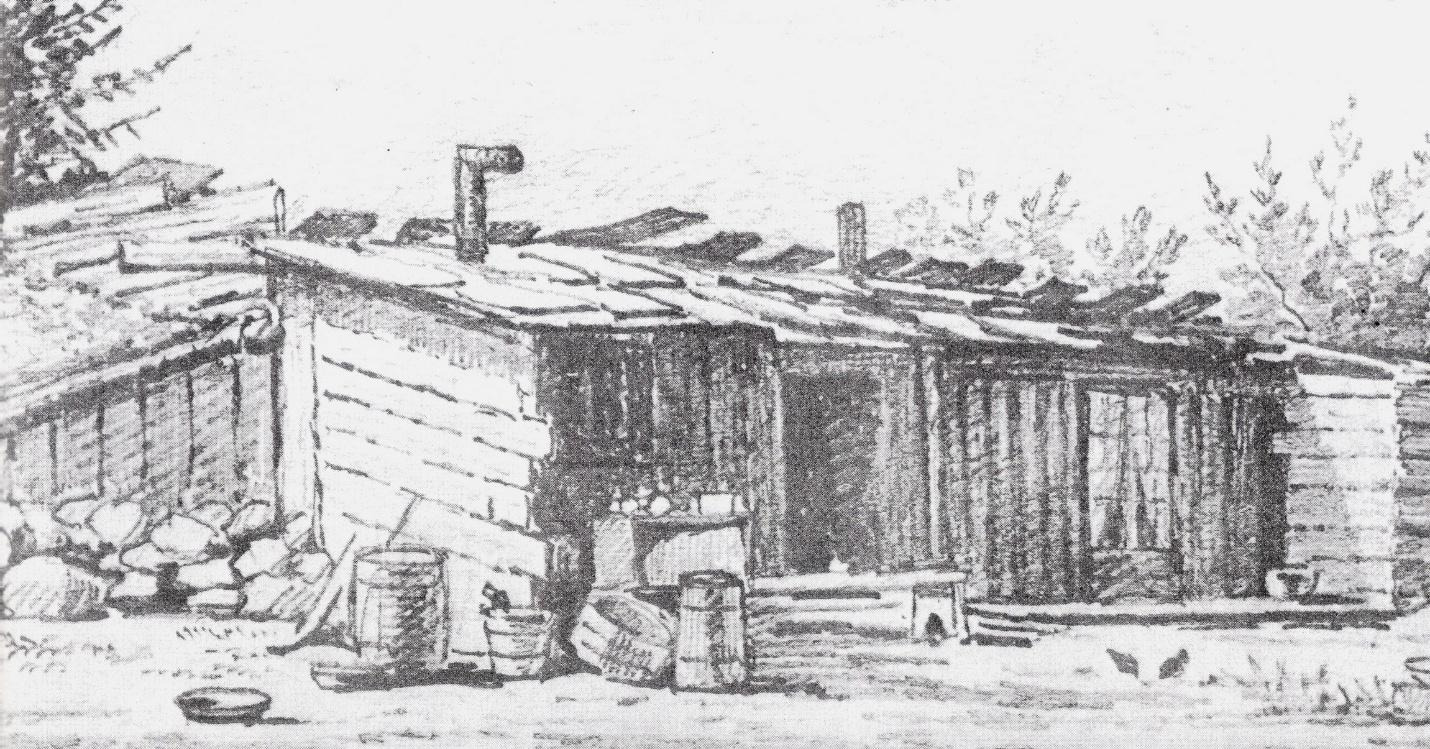
Travelling from England in 1883 with a baby and six children, Anna Leveridge joined her husband David, finally settling in the mining community of Coe Hill, Hastings County. Her skill with her precious sewing machine helped to put food on the table for her family.
Crazy Quilt blocks, which could be made with tiny scraps of fabric, are here surrounded by Spool borders.
Read more
In 1882 Anna’s husband David, in despair over the loss of their savings, had sailed to Canada. At first, he worked in lumbering and on the rail line. But because of steadier work in the iron mines near Coe Hill, north of Kaladar, they moved in deep winter into their new shanty, five miles from the nearest store. To earn extra food and money Anna took in washing and did sewing for her neighbours in exchange for groceries and to make patchwork quilts.
She writes to her mother Coe Hill Mines Wollaston Dec 12/87
…I have been and am still busy at quilt making. Blankets are so dear in this country that we have to make up quilts to keep warm. I take care of all pieces of cloth [cut] out of old clothes and stitch them on the machine, line them and quilt them together and they make warm heavy bed covering. Some of the quilts in this country are very pretty, pieces not bigger than your finger all joined in patterns…
Crazy quilts were always popular with the pioneer quilters since any small shapes could be used without the need for a complex pattern. More elaborate quilts were made by piecing the tops during the winter. Then, when the weather improved in the summer and the cabin could be cleared of furniture, women would gather around a wooden frame for a quilting bee. This was an important social event for families living in isolation and was often followed by an outdoor supper and a square dance.
Anna Weber 1814 – 1888

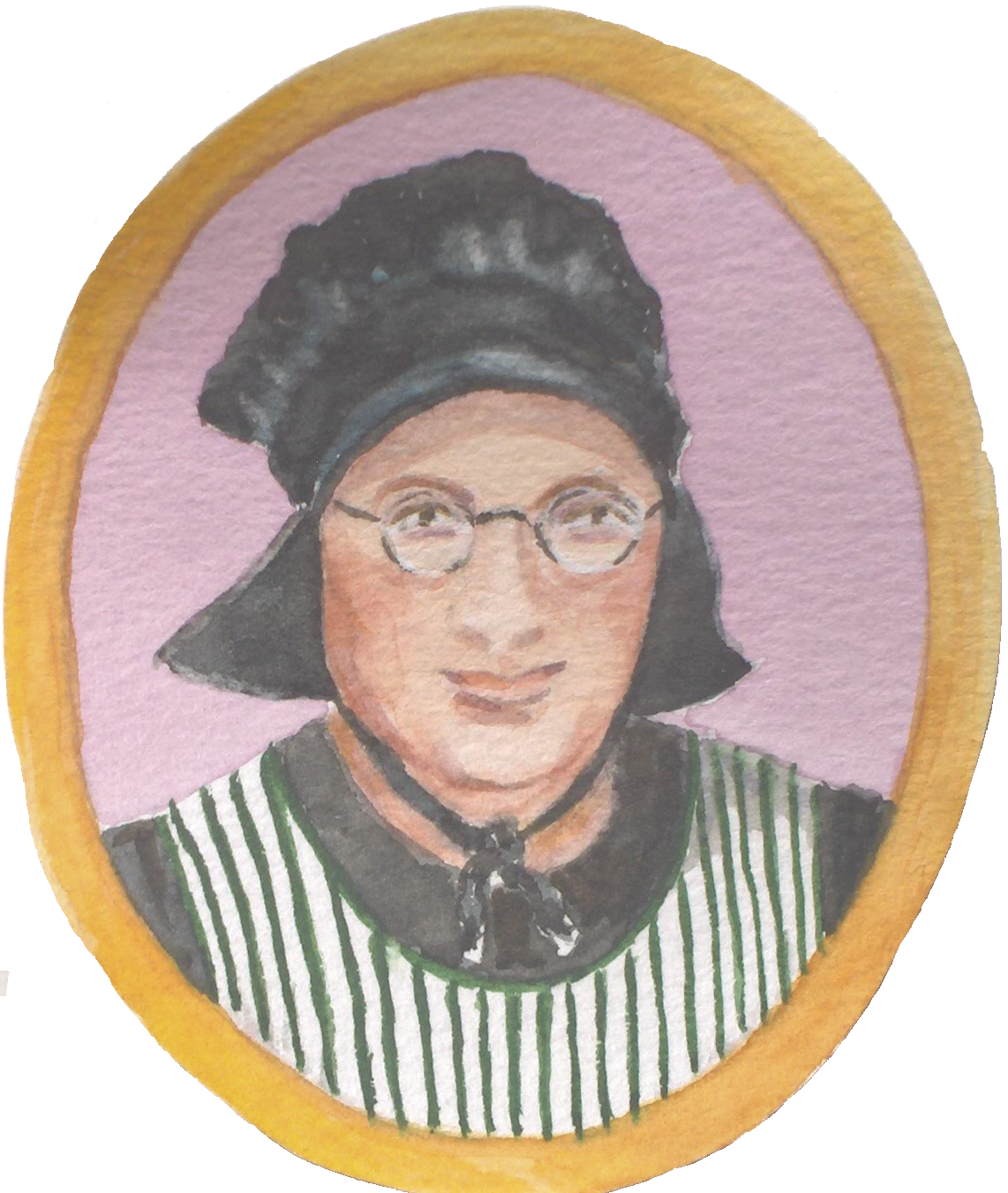
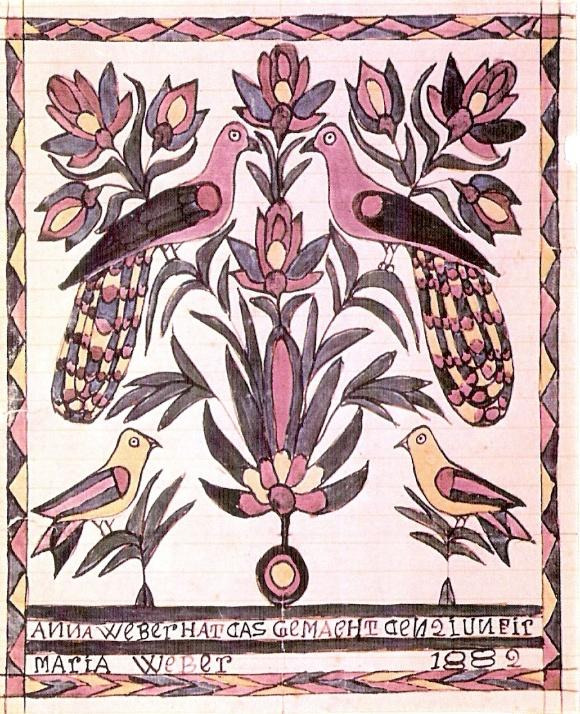
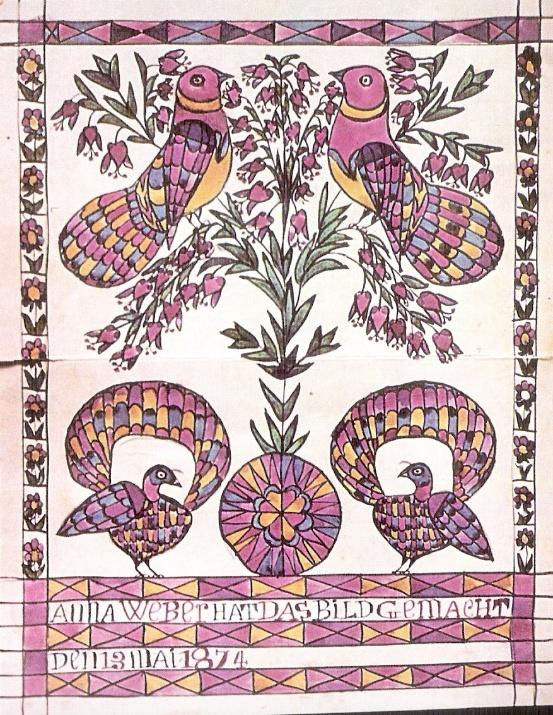
As a young girl, Anna Weber immigrated from Pennsylvania to the Mennonite community of Waterloo. Unusual for a woman, she became a skilled Fraktur artist, who decorated prayer books and baptismal certificates with calligraphy and symmetrical German folk motifs featuring colourful flowers, animals and birds.
Full Blown Tulip, a Pennsylvania German design, uses a flower popular in Frakur designs.
Read more
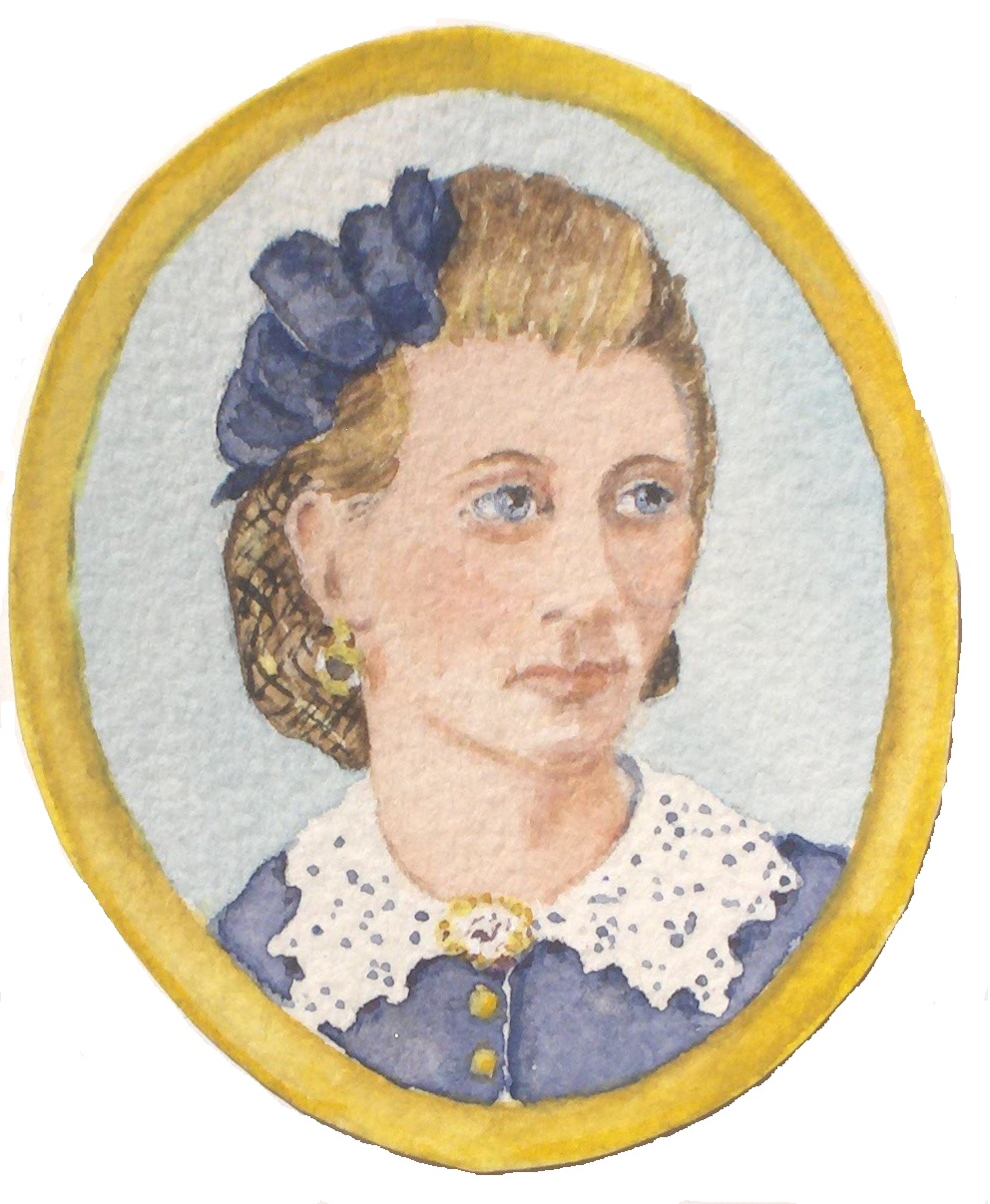
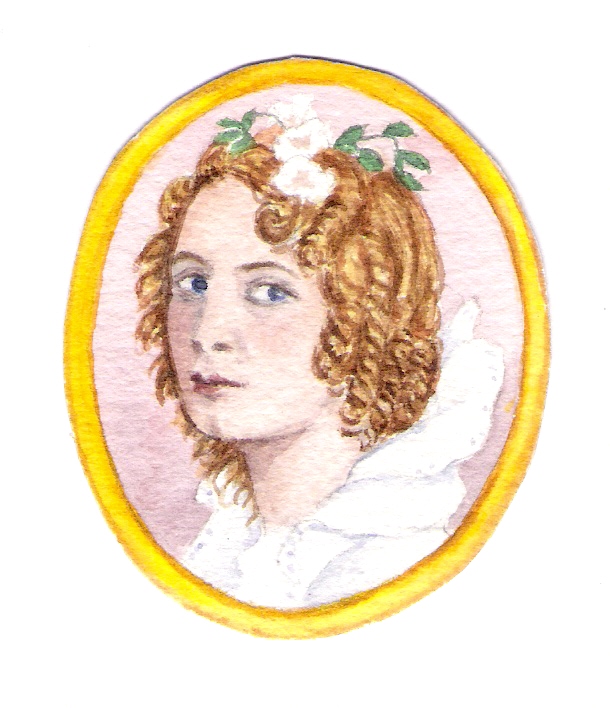
Anna never married, seems to have suffered from ill health and lived with relatives and other community members throughout her life. Working with traditional Pennsylvanian German (often called Pennsylvania Dutch or Deutsch) motifs she became a skilled and original Fraktur artist in her later years, decorating family documents and religious texts for members of the community. I created the watercolour portrait of Anna because no image of her exists.
Fraktur is a German decorative tradition that combines calligraphy and pictorial elements such as the tree of life, hearts, doves and flowers especially tulips. Women Fraktur artists were rare, and Anna’s work is unusual in its subtle home-made colours and amusing use of realistic rabbits, chickens and peacocks.
Mary Ann Shadd 1832 – 1893

Mary Ann Shadd, a teacher, and anti-slavery activist, left her home in Wilmington, Delaware, in 1850, for Windsor, where she founded a racially integrated school for the children of refugee slaves seeking freedom across the border. Three years later, as the first black woman publisher in North America, she brought out the newspaper, The Provincial Freeman, first published in Windsor and later in Toronto until 1860.
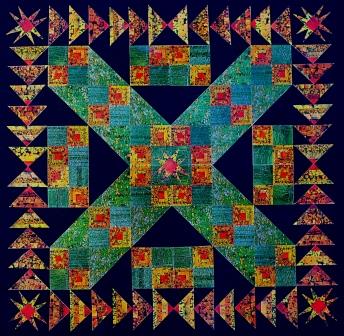
The traditional quilt pattern Jacob’s Ladder or the Underground Railroad here uses Log Cabin blocks for the steps on the ladder or stations on the railroad, with a flying geese border and stars in the corners. Fugitives followed the northward flight of the Canada Goose and used the North Star to guide them.
Read more
In 1852, Mary Ann Shadd published a pamphlet A Plea for Emigration or Notes of Canada West, a practical guide for slaves seeking refuge in Canada. To raise money for her ventures she travelled in the U.S. and promoted her courageous views on freedom, abolition, emigration and women’s rights, even in slave owning states.
She married Thomas Cary, a Toronto barber, in 1856, became mother to his three children and soon had two more of her own. Thomas, sadly, died before the birth of their son in 1860. As a naturalized Canadian citizen Mary Ann continued to publish the newspaper with the help of her brother and others and to write articles for other publications.
She was asked, at the outbreak of the American Civil War, by the Governor of Indiana to recruit black soldiers for the Union army and was recognized for her success. After Lincoln’s Emancipation Proclamation in January 1,1863, she returned to the States to get her official teaching certificate in Detroit and later moved the family to Washington where she became a school principal. She attended law school there, graduating in 1881, becoming the second black woman in the United States to earn a law degree. She was successful in becoming one of the first women to vote in federal elections on the U.S. She died in 1893 after an amazing life full of challenges and rewards. Today a public school in Scarborough named after her and a bronze statue honouring her, has been erected in downtown Windsor.
Nahneebahweequay Catharine Sutton 1824 – 1865


A Mississauga Ojibwe, Nahneebahweequay, or Catharine Sutton, when forced to leave the Credit River on Lake Ontario, settled with her family on the west shores of Owen Sound on land deeded to her by the local Nawash band. Returning from a trip north, she found her 200 acres had been sold for white settlement. When she tried to buy them back, she was told that, as an “Indian” she could not do so. Outraged, Nahnee travelled to England to plead for her rights in an audience with Queen Victoria, who received her with kindness. However, her mission was unsuccessful, and on her return to Canada, her lands were not restored.
Images of Indian corn frame nineteenth century maps, from 1840s and 1850s and those from the 1860s and 1890s which show clearly the encroachment of white settlement on former Indian Lands in a quilt block known as Robbing Peter to Pay Paul.
Read more
At the age of 14 Nahnee had married an Englishman called William Sutton who later became a Methodist missionary. After the move from Port Credit, the couple cultivated 40 or 50 acres, erected a house, barn and stables. William’s missionary work took them away from Owen Sound and on their return, they discovered that the band had surrendered a huge portion of their land, including Nahnee’s 200 acres, to the Indian Department for farm lots to be offered for sale. Nahnee attempted to buy her own lots back but was told that they could not be sold to an Indian. Then she was told that she was no longer eligible to receive a part of the payment for the surrendered land because she was married to a white man.
Nahnee wrote eloquently on behalf of the Indians deprived of their land to the Leader, a Toronto newspaper, arguing:
“ …that Indians have a right to be paid a fair valuation for any lands they may agree to surrender… our present administration can extinguish the red man’s title at pleasure, what hope is there for the remnant that are yet left – to whom can they go for redress – who will help them or are they entirely without helper?”
As an accomplished speaker, she was appointed by the Ojibwe in 1858 to petition the British authorities. After receiving support from sympathetic American Friends (Quakers) she sailed for England. In June1860 she obtained an audience with Queen Victoria. Nahnee, who was eight months pregnant with her sixth child at the time, gave the Queen “articles of Indian manufacture for her children.” Although the Duke of Newcastle, principal Secretary of State for the Colonies, had been present at the audience, he did not follow through with the Queen’s promise of aid and in fact, on a later visit to Canada, said he could do nothing to address the wrong to Indians because the Indian Department had been transferred to Canada from England. Nahnee never saw the deed to her land. Five years after her return from England, in 1865, at the age of 41, Nahnee died of asthma at her home. Eventually her husband William Sutton, as a white man, was able to buy Nahnee’s 200 acres but the other Ojibwe she had represented to the Queen were not so fortunate. Today her land is the site of the Cobblestone Beach Resort and Golf Club.
Mina Benson Hubbard 1870 – 1956

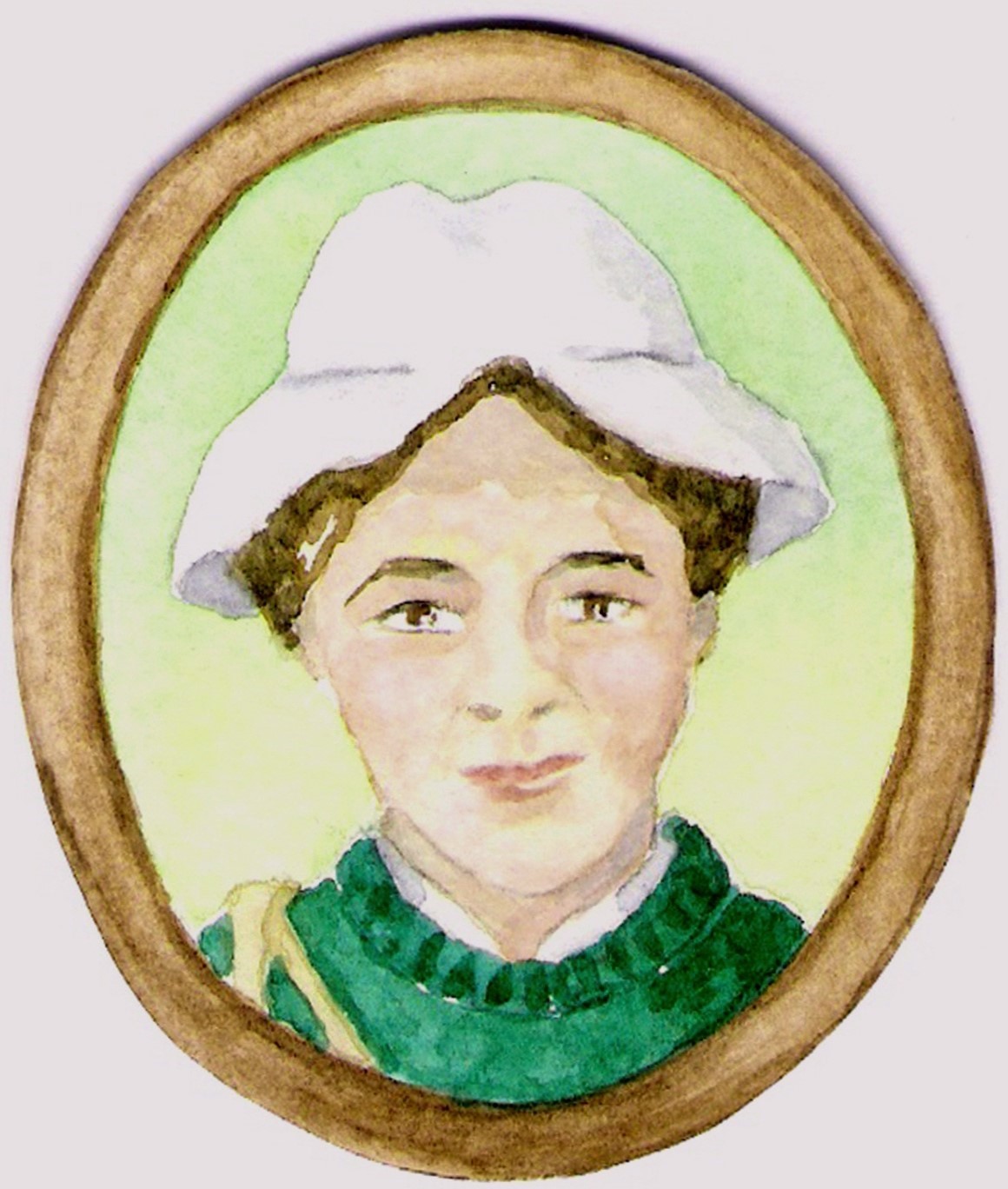
Mina Benson Hubbard was born in Bewdley on Rice Lake. While working as a nurse in the USA, she met and later married Leonidas Hubbard. In 1903, Leonidas had been part of an ill-fated mapping expedition into the interior of Labrador where he became ill and died. In 1905, Mina, then a thirty-five year old widow, set out to complete his work with the help of four Indigenous guides. She successfully travelled by canoe from Northwest River on the east coast of Labrador, to Ungava Bay in the Arctic. Using a sextant and an artificial horizon, she produced the first accurate map of the Nascaupee and George River systems, in Eastern Labrador.
The quilt pattern here, Crossed Canoes, uses birchbark and canvas, placed on a background of her map.
Read more
In her Old Town canoes, from Maine, Mina was the first white woman to travel the nearly 1000 miles through the Labrador interior to Ungava Bay in the Arctic. Her map, published in 1906 by the American Geographical Society, continued to be used for decades. Today much of her route has been flooded for hydro-electric dams.
